


The 3 Hardest Aspects of Chronic Pain: How to Cope
- Anya

- Jan 27, 2025
- 13 min read
Updated: Mar 11, 2025

Living with chronic pain is like navigating an unknown path. It changes you in ways you’d never expect, often leaving you feeling as though your life is constantly shifting beneath your feet like an earthquake.
Through my own journey, I’ve encountered three aspects of chronic pain that seem to stand out more than the rest when it comes to challenging us.
By highlighting them, I hope to make the scary parts known. When they are seen in the light, they might stop having such a hold on us.
These are:
Loss of Control
Limitations
No Escape
I know first-hand how overwhelming these challenges can be, but I've also discovered that there are ways to navigate through them, or maybe more accurately put, to lessen their damage. These challenges don’t define our journey, but they sure as H can feel like they will.
1. Loss of Control: The Weight of Helplessness
Chronic pain feels like a constant, heavy weight. It can feel as though you’ve lost control of your body, your life, and your future (...sometimes you actually have!).
I remember the first time I truly realized that I wasn't in the control cockpit anymore. It wasn’t just a bad day—it was every day for years. And on those most bleak days, I found myself asking:
“Who’s actually in control here? Me, or this pain that seems to control everything?”
Later on, when much time had passed, I started wondering:
“Who am I actually, if pain swallows me whole? Am I even? And if I forget what it feels like to feel pain-free, will I lose myself entirely?”
It’s a terrifying realization. Loss of control can feel suffocating, like being trapped in a room with no windows or even being held down on a gurney with your legs and hands bound, forced to simply watch as everything around you spins to it's own beat, your voice and willpower insignificant and invisible.
I remember forcing myself to remember what it felt like to not have constant pain. The first year after my bike accident (which I've poetically named 'Fall from Grace'), it was relatively ‘easy’ to re-imagine the feeling of good health and vibrancy pulsing through my veins.
But as year 2-3-4 (etc. etc.) rolled around, I noticed that I began having a hard time recalling what it felt like to be without constant pain.
Even in my dreams, I would have a pulsating headache, and the memory of me as a healthy Anya started fading into the distance.
Panic gripped my heart then!
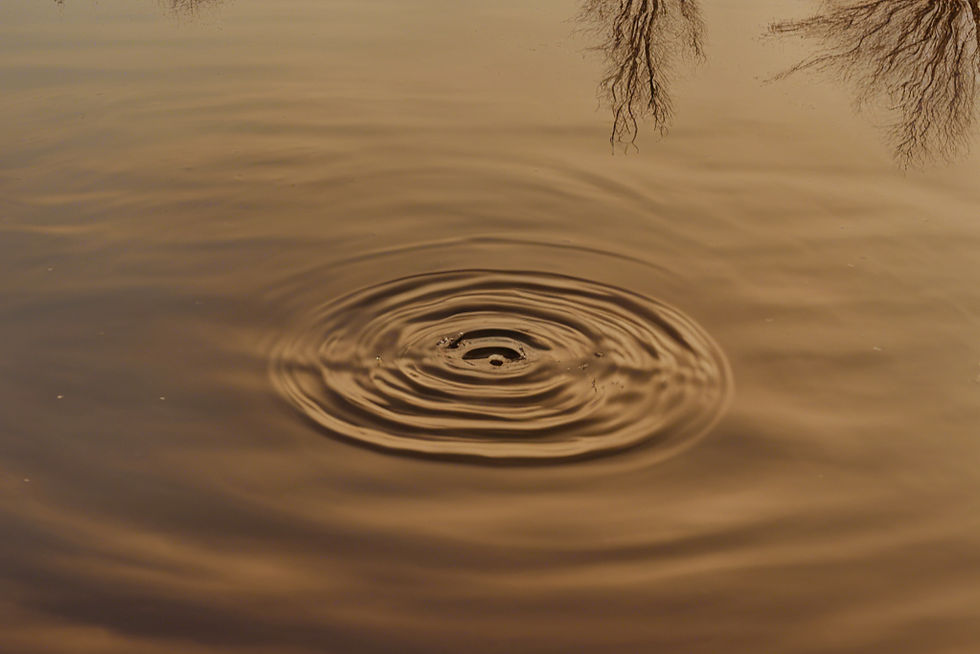
I dug and dug desperately inside my own being, looking for bygone moments when my body was singing in joy.
I couldn't possibly forget what vibrant health felt like, could I?
I had a deep sense that if I forgot entirely, then my pain would win. It would settle even deeper into my being and I'd be locked forever in a dungeon with a ruthless pain master steering the show of my life. Very dramatic, I know!
After much siphoning through old stagnant memories, I found a memory from early childhood that still made my heart sing.
Pain hadn't penetrated to this part of me yet.
It was a memory of a moment filled with bliss and joy—one of my happiest in life.
I was 9 years old, I was healthy and I was free like I'd never felt free in my life before or since.
I clung to this memory like my life depended on it. Maybe it did, Idk.
I would remind myself again and again that this little Anya was still present and alive inside me, regardless of my present physical circumstances.
I could feel like this free again, like that little girl that didn’t have a care in the world—especially not regarding her body.
Sometimes, in the midst of intensifying pain on worse days, I would catch myself and recall this feeling of being Little Me, running in the fields at full speed with a smile on my face, and it actually lightened the pain load.
It actually put a literal smile on my face as I lay in bed curled up swimming in a sea of pain.
I’d force myself to stretch my limbs and lie flat on my back, looking up at the ceiling and noticing this tiny fragile spark of faith deep in my cells.
Thinking this would be me someday again.
I’ve learned that while I might not be able to control the actual pain itself, I can control how I respond to it.
I can choose whether to laugh or cry.
The choice really is mine, even if that’s all I have in that moment.
It's not much, but it's where the last bits and pieces of control reside.
I discovered that the real strength lies not in fighting the pain, but in accepting it as a part of the journey.
Boy, that sounds cliché.
The hidden key is to understand that to gain access to this control, even if it looks so slight, we first have to let it go. And this is the big challenge, cause it can feel like giving up.
2. Limitations: The Pain of Restriction
One of the personally most challenging things I’ve faced with chronic pain is the constant reminder of what I can’t do.
It’s like having a dream in your heart that burns bright, but being unable to chase it because the physical limitations feel too heavy—like your feet are stuck in cement.
I’ve spent days in frustration, slamming kitchen cabinets because I couldn’t do something as simple as preparing a meal without pain intensifying.
It’s not even about missing out on big things, although they hurt too—it’s especially about the small moments. The things that others might take for granted like:
Walking in the sun (or walking at all!)
Going for a run
Reading a chapter in a book
Even just getting through the day without exhaustion or discomfort
The notion of settling is such an unacceptable sensation for me that it seriously tortured my mind.
I couldn’t accept that I didn’t have the possibility open to be the best and had to resign myself to the second helpings of life’s choices, or my definition thereof.
I found it excruciating. Even when I write this sentence, my face cringes.
I know how easy it is to fall into the trap of thinking:
“I’ll never be able to live the life I want if I can’t do these simple things. I will miss out on everything!” (über Fomo mode).
It feels like a cruel paradox—you want more from life and your mind tries to push you to reach for the sky, but you’re constantly limited by your own body.
I didn't want to settle. To just survive. What kind of live was that.
So, I was left with being forced to redefine what it means to live. I learned to dream within the space I have now, to be creative with what I can do right now and not look too far ahead, into the next day, next week or next year.
I basically learned to put these funny metaphorical eye blocks on like the ones horses sometimes wear, so that I could only see a sliver of the road in front of me.
Not too little so that I felt I wasn't making progress, but not too much either, so that I felt that limitation was all my life consisted of.
With that being said, I don’t think my personality is made to settle. I simply cannot stand the word and the feeling of it.
And so, much of of I share shows this fierce defiance in the face of struggle and the determination to get through on the other side—even if it takes me an entire lifetime.
3. No Escape: The Unwanted Shadow
The 3rd challenge is a sense of being being trapped in your own body. There’s no escaping it.
Whether you're out with family, enjoying a quiet moment looking at the clouds drifting by, or even trying to rest in a bath, the pain is always there, lurking like a peeping tom.
It’s like an unwanted shadow that follows you wherever you go.
In everyday life we have ways to distract ourselves—hanging out with friends, going for a run read a good book, binge-watching LOTR for hours on end, or having a chat with a confidant.
Although avoidance and distraction aren't the best way to deal with problems, it is a way to get respite, sometimes so we can see more clearly and find a new perspective.
Sometimes simply to get the body to rest awhile, away from the worries that plague us, before we tackle our issues.
I didn’t know that this method of avoidance and distraction was actually a luxury afforded only in some life situations.
Chronic pain whispered to me with glee;
“No no, I go wherever you go, my darling.”
And that was that.

And when life gets doubly hard—whether it’s a family crisis, financial stress, or emotional turmoil—the pain is still there, unwavering. It doesn’t give you a break, and it doesn’t let you forget that it’s always waiting.
Personally, I was forced to miss both my beloved grandmothers’ funerals. The first time was shortly after my heart operation and I could not travel at all (she was located in another country).
And the second time was when the inflammation from the head injury was at its highest and I was lying down 24-7 for months on the couch and couldn’t move.
At times, it really does feel like there’s no room for relief.
While the pain may not fully disappear, I have discovered an ability to find pockets of peace within it.
I could choose to take a deep breath, a walk in nature, or simply sitting with a cup of tea and still feel tortured by the shadow that does not escape because my perspective was focused on it.
Or I could learn to catch (maybe even re-discover) my awareness and shift the perspective juuuust enough so that those small moments of stillness amidst the chaos would blossom.
It only takes a slight shift in perspective and rearranging of priorities. So slight, it almost goes unnoticed, if not watchful of your awareness.
Surviving vs. Living
With these heavy challenges, how do we truly live with chronic pain? Is it even possible to truly live, or do we simply survive?
I’ve experienced both—first merely surviving, gritting my teeth, holding on and just getting through each day. Then, to the hard part, learning to live, despite the challenges. It took everything in me to reach a point where I was ready to embrace life, pain and all.
The shift to start living despite the obstacles and pain didn’t happen overnight. It took everything I had to hold onto the belief that there was still more for me in life than the pain.
And that 'more for me in life' was possible in spite of pain being present.
The shift happened when I woke up to the fact that the one thing I could control was my belief -- in anything, but in this case it was in finding a way out of pain.
By 'belief' I mean the story we tell ourselves about anything at all.
I held on for dear life to this belief that life in good health was possible for me again, no pun intended.
I could give up and accept that pain would be my lifelong companion or embrace my situation as it was, while still nurturing the flame of faith in my heart through belief.
Maybe my dreams wouldn’t manifest today or tomorrow or even 10 years from now, but I held onto my belief in a future, simultaneously with taking one step forward each day, being grateful to be alive, warts and all.
Feelings vs. Emotions

A powerful lesson I’ve learned is the distinction between feelings and emotions (as explained by the brilliant scientist Harald Kautz), and I would like to share it with you.
Feelings are temporary, like the ebb and flow of water. They are actually energy currents that flow inside you effortlessly. They come and go as you go about your days and take in life through your particular makeup and filter in all its shapes and colors.
Emotions are stuck energy pockets created within our bodies. They are trapped feelings that transform into what we call an emotion, when we don’t allow ourselves to truly feel the feelings as they arise, no matter how unpleasant (or pleasant).
So trauma, shock, or unpleasant experiences—if not fully felt in the moment—become trapped emotions in our body, waiting to be expressed later, when a trigger sets off a memory of the feeling that was not allowed a natural flow. The more emotions become trapped, the bigger the wave they create in the ocean of our energy field.
We all have trapped emotions, cause life sucks for all of us at some point in our lives. We all have life experiences, from childhood to adulthood, that have shocked our body and mind.
The trick is to ease into those stored emotions gently, so that the emotional tidal wave doesn’t overwhelm us.
Suppressing Feelings Only Makes Them Stronger
When we avoid feeling pain and the feelings that come with it, the wave builds and builds.
Let me give you an example:
I have dealt with a lot of internal anger—it was my big emotional wave. I was so, so angry at being dealt this card of pain in life before I even truly began living it. It felt deeply unfair.
I couldn’t just sit with the pain. I was afraid it would explode in my face if I did. And at times the pain was so all-consuming that I had no other choice but to, in a way, disassociate from it, by drifting away and not be present, otherwise my consciousness would shut down.
So I buried the anger—consciously and unconsciously—to be dealt with later.
"Let me get out of the hamster hell of chronic pain and theeen I'll deal with the anger and frustration it brought with it", was my clueless reasoning at the time.
Again and again, anger got pushed into my subconscious.
Then, in moments of exhaustion and frustration, it would rear its ugly head—like when I struggled to make my own food.
I’d slam the lid on the pan in a fit of rage, smashing it, or I’d slam the kitchen cupboards with a ferocity that even scared myself, disturbing the neighbours with the racket.
The temper tantrum left me with a worse headache and a mess of glass on the floor.
Suppressing obviously didn’t help—but I didn’t know that until I knew.
I hope that by sharing this, I can help you learn faster than I did, so you don’t have to sit with stuck emotions that frustrate the bejeezus out of your body (and mind).
The Hardest Yet Most Powerful Practice
When you’re struggling with chronic pain, it’s easy to suppress the anger, fear, and sadness that come with it.
In a way, it a form of self-preservation, cause often there is so much to deal with internally, that it simply gets to be too much. But there is also a price to pay for suppressing. These unexpressed emotions only grow stronger.
I’ve found that by more often allowing myself to feel what’s coming up—whether it’s frustration or fear—I’ve been able to release trapped emotions and lighten the load on my body and mind.
I can't do it all the time. It's simply too much for my frail body to cope with. But more often, small pockets of release make a difference.
I must also mention, this has been one of the hardest tasks I’ve ever had to do.
To sit with the gunk that emotions makes me feel.
Not to do. Not to say. Not to force. Not to react.
To just sit and watch the emotional wave as neutrally as possible as it rose and crashed within me.
The more I practiced this, the less scared I became because I realized:
When the emotional wave of suppressed or overwhelming emotions finally crashed on the shore of my body and mind, I was still standing. I survived the tidal wave, sometimes the tsunami.
If I could face that—face myself at a deep level—then I could face anything.
This meant I had discovered a certain power that lies dormant within all of us. And with all the emotions running through me, I had ample opportunity to test this power.
Important Caveat
There might be times on your journey when the only navigation that helps is simply holding on tight while the storm rages around you.
The idea that 'doing something' always changes something with immediate effect, is a trap.
This expectation can cause more anguish when we don’t get the results we expect in the timeframe we thought, making us feel even more trapped.
The pain is just the pain. It will stop when it stops and not a moment sooner.
The real struggle comes from how we relate to the pain—not the pain itself.
How we relate to time and what we expect from it.
There are times when the only thing we can ‘do’ is wait it out.
This is important to remember because we are constantly told, “just do this,” “just do that,” “just take action, and everything will change.”
But sometimes, doing everything possible changes nothing --At the time.
If we believe that it should, it only causes more mental and emotional anguish, making us feel even more trapped.
Breathe Through the Storm
When you’re going through a wringer and feel like you cannot escape, remember:
This is an emotional and mental reaction to pain. It’s not the actual pain telling you that you’ll be stuck with this forever.
Here’s what helps:
👉 Breathe—like a woman breathing during labor.
👉 Resist reacting to your thoughts on whatever emotions and concepts comes up, let them flow and crash into you at will, but don't act on them.
👉 Know that fear, sadness, anger, panic comes and goes. It never ever stays put forever.
Sometimes, the waves last minutes sometimes hours, days, weeks, or even months. The longer the periods are the bigger the challenge—but again, the same method applies.
When you’re in a long storm, and you’re on the verge of panic attacks, thinking you’ll never escape pain, remember that TIME is everything.
It won’t feel less painful in the moment knowing this, but it gives perspective—and that is all that’s needed to get through the emotional storm.

It took me years to navigate the effect that chronic pain has, to provoke overwhelming emotional states—ones we don’t have seeming control over.
And that sometimes, no matter how hard we try, we won’t find the solution in the moment.
It takes time.
(Gawd, I hate that sentence, tbh. I really do.)
I heard it so many times, and I always wanted to lash out—
“Yeah, right, I’ve already given it 7 years of my time!!!”
Ride the Storm Like an Expert Surfer
When everything goes to shit, remember that even shit doesn’t last. At some point, a new situation will arise.
Ride the storm like an expert surfer, knowing that calm seas will always come again. At some point.
And by ‘calm seas,’ I don’t mean you’ll suddenly be cured.
I mean you’ll learn how to weather the emotional storms that hit you on this unknown path toward full health.
That, in itself, is a kind of healing.
Conclusion
Living with chronic pain is undeniably hard, but I want you to know that you’re not alone in it.
The sentence sounds hollow as I write it, but I truly do mean it!
The challenges you face—loss of control, limitations, and no escape—are real, but they are not all of life.
It is possible to cope with them, to embrace the journey, and to discover new ways to live—ones that might even be sweeter than the life you thought you wanted.
Sometimes, the difference is made in something as small as knowing that others are walking a similar path to yours.
They, too, are in the dark, looking to (re)discover that spark that never dies inside them.
That is why I’m writing all of this. Because I was looking for this knowing when I was at my lowest.
Looking for mutual understanding, looking for my comrades on the unknown paths of pain.
We might not be able to see each other, but we can still affect each other—sending sparks of inspiration in every direction to lighten the path.
By shifting perspective, practicing acceptance of what-is-as-it-is right now and learning to navigate the waves of emotional pain with patience and kindness toward our body, we can go from surviving to truly living.
One small step at a time.


Comments